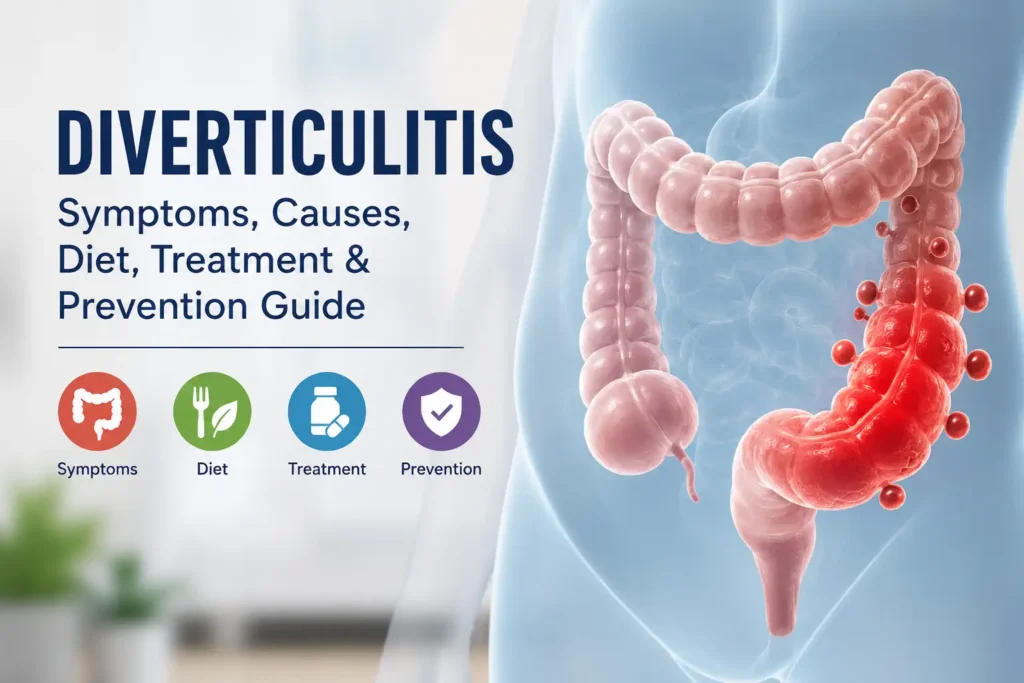
Recognizing diverticulitis symptoms early can help prevent complications and improve recovery outcomes. While many people live with diverticulosis without any noticeable issues, inflammation of the colon pouches can trigger a range of digestive and systemic symptoms. Understanding what to look for may help you determine when it’s time to contact a healthcare provider.
This guide covers the most common warning signs, where pain typically occurs, how flare-ups feel, and symptoms that may require urgent medical attention.
Table of Contents
- Overview of Symptoms
- Abdominal Pain and Pain Location
- Digestive Symptoms
- Fever, Fatigue and Other Systemic Symptoms
- Symptoms During a Flare-Up
- Signs of Serious Complications
- When to See a Doctor
- FAQ
- References
Quick Self-Assessment Checklist
This checklist is for educational purposes only and should not be used to diagnose any medical condition. If you answer “yes” to multiple questions below, consider discussing your symptoms with a healthcare professional.
Results: If you checked three or more boxes, especially those involving abdominal pain, fever, nausea, or bowel habit changes, your symptoms may warrant medical evaluation. Seek immediate medical attention if you experience severe pain, high fever, rectal bleeding, persistent vomiting, or an inability to pass stool or gas.
Overview of Symptoms
The symptoms associated with inflamed diverticula can vary significantly from person to person. Some individuals experience mild abdominal discomfort, while others develop severe infections requiring hospitalization.
Common warning signs include:
- Lower abdominal pain
- Tenderness in the abdomen
- Nausea
- Vomiting
- Fever
- Bloating
- Constipation
- Diarrhea
- Loss of appetite
- Fatigue
Symptoms often develop gradually over several days, although sudden onset can occur in more severe cases.
Abdominal Pain and Pain Location
One of the most frequently reported complaints is abdominal pain. In many cases, discomfort develops in the lower left portion of the abdomen because the sigmoid colon is commonly affected.
Diverticulitis Pain Location
The exact location of discomfort can vary, but pain is often concentrated in:
- Lower left abdomen
- Lower central abdomen
- Occasionally the right side of the abdomen
- The pelvic region
Many patients describe the sensation as:
- Cramping
- Persistent aching
- Pressure-like discomfort
- Sharp or stabbing pain
Unlike temporary digestive upset, pain related to colon inflammation often remains constant and may worsen with movement, coughing, or pressure on the affected area.
Can Pain Spread to the Back?
Some individuals report discomfort radiating into the lower back. Although back pain is less common than abdominal tenderness, it can occur when inflammation irritates nearby tissues or when severe infection develops.
Persistent back discomfort accompanied by fever, nausea, or worsening abdominal symptoms should be evaluated by a medical professional.
Digestive Symptoms
Because the condition affects the large intestine, digestive disturbances are common.
Nausea and Vomiting
Nausea is a frequently reported symptom, particularly during acute episodes. As inflammation worsens, some individuals may also experience vomiting, reduced appetite, and difficulty eating normal meals.
Digestive upset often improves as inflammation resolves and normal bowel function returns.
Can Diverticulitis Cause Constipation?
Yes. Constipation is one of the most common bowel-related symptoms. Inflammation can alter normal intestinal movement, making it difficult to pass stool comfortably.
Signs may include:
- Fewer bowel movements
- Difficulty passing stool
- Abdominal pressure
- Incomplete evacuation
Can Diverticulitis Cause Diarrhea?
Yes. While some individuals develop constipation, others experience diarrhea. Changes in bowel habits are common because inflammation affects how the colon processes waste material.
Loose stools may occur alongside abdominal pain, bloating, and fatigue.
Does Diverticulitis Cause Bloating?
Bloating is another frequently reported complaint. Many people notice a sensation of fullness, abdominal swelling, or excess gas during an acute episode.
Inflammation can temporarily slow digestive function, contributing to increased pressure and discomfort throughout the abdomen.
Fever, Fatigue and Other Systemic Symptoms
Not all symptoms are limited to the digestive tract. As the body responds to infection or inflammation, additional symptoms may develop.
Fever
A mild to moderate fever often indicates that the immune system is actively responding to inflammation within the colon.
Fever may be accompanied by:
- Chills
- Sweating
- Body aches
- General weakness
High fever should always be taken seriously, particularly when combined with severe abdominal pain.
Fatigue
Many patients report unusual tiredness during active inflammation. The body’s immune response requires energy, which can contribute to exhaustion and reduced physical activity.
Fatigue may persist for several days even after other symptoms begin improving.
Loss of Appetite
Reduced appetite is common during acute digestive illness. Some individuals find that eating worsens discomfort, causing them to consume fewer calories until symptoms improve.
Symptoms During a Flare-Up
A flare-up occurs when previously stable diverticular disease becomes inflamed again.
Diverticulitis Flare-Up Symptoms
- Persistent abdominal pain
- Bloating
- Fever
- Nausea
- Changes in bowel habits
- Tenderness in the lower abdomen
- Fatigue
- Loss of appetite
The intensity of symptoms can vary. Some flare-ups are relatively mild, while others progress rapidly and require urgent treatment.
How Long Does a Flare-Up Last?
Recovery times vary depending on severity and treatment. Mild episodes may improve within several days, while more significant infections can take several weeks to fully resolve.
Prompt diagnosis and treatment often shorten recovery time and reduce the risk of complications.
Signs of Serious Complications
Most episodes respond well to treatment, but severe inflammation can occasionally lead to complications.
Seek immediate medical attention if you experience:
- Severe abdominal pain
- High fever
- Persistent vomiting
- Rectal bleeding
- Inability to pass stool or gas
- Rapidly worsening symptoms
- Signs of dehydration
These symptoms may indicate an abscess, bowel obstruction, perforation, or another serious condition requiring urgent medical care.
When to See a Doctor
Contact a healthcare provider whenever persistent abdominal pain, fever, or changes in bowel habits occur without a clear explanation.
Diagnosis typically involves:
- Review of symptoms
- Physical examination
- Blood tests
- CT imaging
- Follow-up colon evaluation when appropriate
Early diagnosis helps distinguish inflammation of diverticula from other digestive conditions such as irritable bowel syndrome, appendicitis, inflammatory bowel disease, or gastrointestinal infections.
Frequently Asked Questions
What is the most common symptom of diverticulitis?
Persistent pain in the lower left abdomen is typically the most common symptom.
Can diverticulitis cause nausea?
Yes. Nausea frequently occurs during acute inflammation and may be accompanied by reduced appetite or vomiting.
Can diverticulitis cause back pain?
Although less common, discomfort may radiate into the lower back, particularly during more severe episodes.
Does diverticulitis always cause fever?
No. Some individuals develop fever, while others experience primarily digestive symptoms.
Can symptoms come and go?
Yes. Many people experience periods of remission followed by occasional flare-ups.
How do I know if symptoms are serious?
Severe pain, high fever, vomiting, rectal bleeding, or inability to pass stool should be evaluated immediately.